

Why Choose Spectra Eye For Cataract Surgery In Mauritius?
Spectra Eye offers cataract surgery in Mauritius, with treatment options tailored to each patient's eye condition and vision needs. Trained specialists work throughout the year to deliver full eye care services. These range from basic procedures to complicated surgeries, all done with attention and expertise. People looking for top-notch cataract treatment in Mauritius can depend on the clinic’s modern facilities and skilled surgeons to offer safe, efficient, and personalized care.
According to the World Health Organization, cataract remains a leading cause of vision impairment worldwide, which is why timely assessment and treatment matter. For patient-friendly overviews of cataract surgery, see also the NHS cataract surgery guide.

STATE OF THE ART FACILITIES

INSURANCE ACCEPTED

ONE DAY PROCEDURES

EXPERIENCE OF MANY SURGERIES

Multiple Centers across the Globe
Get Consultation with Cataract Surgery Expert
What Is Cataract?
Cataracts happen when the natural lens in your eye gets cloudy and stiff, making your vision blurry or darker. This can make daily tasks harder to do. While cataracts are seen in older people, they can also appear in babies or younger folks. To confirm if you have a cataract, doctors need to do a full eye checkup. Cataracts cannot heal themselves, and surgery is the only way to treat them. Thinking about getting cataract surgery in Mauritius? The skilled team at Spectra Eye can help you have a smooth and safe procedure.
Types of Cataract
Age-Related Cataracts
Aging can cloud the lens in your eye. This common cataract often connects to smoking too much alcohol, or health issues such as diabetes.
Cortical Cataracts
These cataracts grow in the outer layer of the lens called the cortex. They appear as wedge-shaped cloudy areas stretching from the edges of the lens toward its center.
Posterior Subcapsular Cataracts
These form at the back of the lens just under its capsule. They often make it harder to read and cause glare or light halos in bright environments.
Congenital Cataracts
Genetic issues or infections during pregnancy often cause these cataracts, which are either present at birth or emerge in childhood.
Traumatic Cataracts
An eye injury can lead to these cataracts. They might form right after the trauma or take years to show up.
Secondary Cataracts
These cataracts may appear after eye operations like glaucoma surgery or because of illnesses like diabetes.
Radiation Cataracts
Exposure to ionizing radiation causes these cataracts, which sometimes develop in people getting specific cancer treatments.
Causes of Cataract
Genetics: Having a family history of cataracts raises your chances of getting them.
UV Radiation: Spending too much time in sunlight or under UV rays harms the eye's lens.
Medical Conditions: Conditions like diabetes or high blood pressure speed up the growth of cataracts.
Medications: Certain medications, especially long-term steroid use.
Unhealthy Habits: Smoking or drinking a lot of alcohol can lead to a higher chance of developing cataracts.
Poor Nutrition: Eating food that lacks important vitamins and antioxidants weakens the lens and makes it prone to damage.
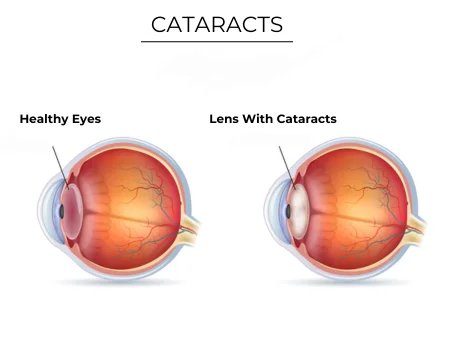
Symptoms of Cataract
Cataracts tend to form, and because they are often linked to aging, many confuse them with typical signs of getting older. The condition does not hurt, but it can make vision more and more blurry or cloudy over time. Symptoms can go from minor vision problems to serious trouble with daily activities.
- Cloudy or blurry eyesight
- Struggling to see at night
- Bright lights or glare can feel uncomfortable, especially during night-time driving
- Needing to update glasses or contact lens prescriptions often
- Colors appear faded or tinted yellow
- Less sharpness or lower contrast in colors
- Double Vision

Advantages of Modern Cataract Surgery Technology
The latest methods and tools in cataract surgery have greatly boosted safety and enhanced visual results. Below are some main advantages:
Sharp Vision: New technology helps people see more clearly, giving a big boost to how they view the world and making daily life more comfortable.
Fast Healing: Small and precise techniques help people recover faster, letting them get back to their regular routines earlier.
Less Dependence On Glasses: Today’s intraocular lenses (IOLs) often cut down or remove the need to use glasses after surgery, whether it’s for far or near sight.
Improved Safety: Modern surgical tools and safety features lower the chances of things going wrong during the operation.
Comfortable Experience: Better procedures lead to less pain both while the surgery is being done and after it’s over.
Cataract Surgery Procedure
Cataract surgery in Mauritius may involve different surgical techniques, depending on the severity of the cataract and the patient's eye health.
Phacoemulsification Cataract Surgery
This is the most popular way to remove cataracts. Surgeons use ultrasound waves to break apart the cloudy lens and take it out through a small cut. To bring back clear sight, they put in a new artificial lens known as an IOL.
Extracapsular Cataract Extraction (ECCE)
This older technique works well for removing cataracts. Surgeons take out the cloudy lens in a single piece through a bigger opening. They choose this when the cataract is too thick to handle with phacoemulsification.
Intraocular Lens (IOL) Options
Patients have multiple IOL options based on their vision requirements and daily activities:
Monofocal IOL
This lens gives sharp vision at one fixed distance for seeing far. You might still need reading glasses for close-up tasks.
Multifocal IOL
This type of lens has multiple focus points. It helps you see at different ranges and may lessen your need for glasses.
Toric IOL
Designed to fix astigmatism, this lens improves vision for those with this specific eye issue.
Laser-Assisted Cataract Surgery
Laser-assisted cataract surgery uses advanced femtosecond laser technology. It offers better accuracy and might help in speeding up recovery.

Post-Cataract Surgery Care
Patients should stick to these care tips to recover after their procedure.
- Follow the instructions for using your eye drops.
- Do not rub or put pressure on your eye.
- Keep your eyes safe from dust and water.
- Put on sunglasses when outside to shield against UV rays.
- Stay away from heavy physical activities during the initial weeks.
- Make sure to go to every follow-up appointment with your doctor.
Factors Affecting Cataract Eye Surgery Cost In Mauritius
The cost of cataract surgery in Mauritius depends on the surgical technique, the intraocular lens selected, diagnostic tests and the patient's individual treatment requirements.
- The kind of technology used (standard or laser-assisted)
- The necessary diagnostic tests
- The selected hospital or clinic
- The type of intraocular lens chosen
- Fees for the surgeon and anaesthetist
- Any other eye-related conditions
- Follow-up visits and postoperative care
To get a clear idea of the costs, you can call our patient care team at +230 5251 7100 to receive tailored advice. For an accurate cost estimate, you can contact our patient care team at +230 5251 7100 for personalized guidance.
Book Your Cataract Surgery Consultation Today
TESTIMONIALS
★★★★★
“My cataract surgery at Spectra Eye was smooth and professional. Vision improved within days.”
— Patient review
★★★★★
“Clear explanations before surgery and excellent aftercare. Highly recommend Spectra Eye Mauritius.”
— Patient review
★★★★★
“Advanced technology and caring staff. I feel confident recommending this eye hospital.”
— Patient review
Frequently Asked Questions About Cataract Surgery
A. The main cataract surgery techniques include phacoemulsification, extracapsular cataract extraction (ECCE), and intracapsular cataract extraction (ICCE). Phacoemulsification is commonly used, while the appropriate technique depends on the patient's eye condition and the surgeon's assessment.
A. Cataract surgery is usually not painful because local anaesthesia is used to numb the eye. Patients may feel mild pressure during the procedure and experience temporary irritation or discomfort afterwards.
A. Cataract surgery is a common procedure that is generally safe when performed by a qualified eye surgeon. Like any surgery, it carries potential risks, and an eye examination helps determine suitability and explain possible complications.
A. A small instrument is used to keep the eyelids open during cataract surgery, so you do not need to worry about blinking. Follow your surgeon's instructions and let the surgical team know if you feel uncomfortable.
A. Some patients may need their eye or general health conditions assessed or treated before cataract surgery. An ophthalmologist will examine the eyes, review relevant medical conditions and determine whether surgery is appropriate.
A. Phacoemulsification is a commonly used cataract surgery technique that removes the cloudy lens through a small incision. The best approach depends on the cataract, the patient's eye health and the ophthalmologist's assessment.
A. Cataract surgery involves removing the cloudy natural lens of the eye and replacing it with an artificial intraocular lens (IOL). The procedure usually uses local anaesthesia and techniques such as phacoemulsification, which uses ultrasound to break up the cloudy lens before removal.
A. Most patients notice improved vision within a few days after cataract surgery, while complete healing generally takes around 4–6 weeks. Recovery varies between individuals, so patients should follow their eye surgeon's instructions and attend all follow-up appointments.
A. Common temporary side effects of cataract surgery include mild discomfort, itching, watering, light sensitivity and blurred vision. Severe pain, increasing redness, or sudden or worsening vision loss requires urgent medical attention.
A. Yes, mild blurred vision can be normal during the initial recovery period after cataract surgery as the eye heals. However, if blurred vision worsens, persists, or occurs with pain or redness, contact your eye specialist promptly.
A. The cost of cataract surgery in Mauritius depends on the surgical technique, type of intraocular lens, diagnostic tests and surgeon's fees. Contact Spectra Eye at +230 5251 7100 for a personalised cost estimate based on your eye condition and treatment needs.